Maryland Cannabis Market in 2025: What Do the Numbers Really Tell You?
The Maryland cannabis market is growing. But if you only look at the top-line numbers, you will miss what is actually happening. Here is a full breakdown of what the data shows.
Maryland's cannabis market hit around $1.17 billion in total sales in 2025, a 0.41% overall increase. Vape products made up about $269 million of that. Flower still leads at 49% of the market, while vape holds 22%, just below the national average of 25%.
Maryland only legalized recreational cannabis sales on July 1, 2023. That makes it one of the newer legal markets in the U.S. New markets tend to share certain traits, and Maryland is no exception. Prices are higher than average. Consumer habits are still forming. And the data is only now starting to tell a clear story. Let me walk you through what I found.
What Does Maryland's Cannabis Category Breakdown Look Like in 2025?
If you are a cannabis brand trying to enter Maryland, you need to know where the money is going. Getting this wrong means targeting the wrong product category from day one.
In Maryland, flower dominates with 49% of the market, well above the 40% national average. Vape sits at 22%, below the 25% national average. Pre-roll and edibles each hold around 12% of the market.
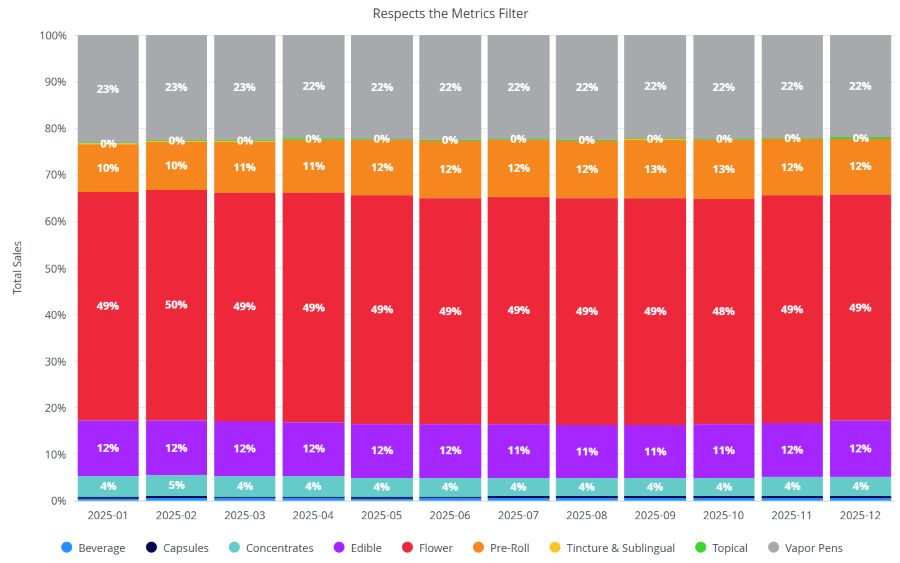
Maryland's flower share being so far above the national average tells me something important. This is a market where consumers are still buying the way they always have. Flower is familiar, it is trusted, and in a newer legal market, consumers tend to default to what they know. Vape, on the other hand, is underpenetrated compared to mature states.
| Category | Maryland 2025 | National Average |
|---|---|---|
| Flower | 49% | 40% |
| Vape | 22% | 25% |
| Pre-roll | 12% | ~14% |
| Edible | 12% | ~12% |
The gap between Maryland's 22% vape share and the 25% national average is not huge. But it points to a real opportunity. As the market matures, vape's share should grow. I have seen this pattern in other states that legalized recently. Consumers move toward vape as they become more comfortable with cannabis products in general and as retail education improves. For brands entering Maryland now, vape is a category with upside. The floor is already established. The ceiling has not been hit yet.
What Is the Price Level for Vape Products in Maryland?
Price is one of the first things a brand or distributor asks about when entering a new state. And in Maryland, the answer matters more than you might expect.
Maryland vape prices sit at the higher end of the national range, similar to New York and Missouri. This is typical of newer legal markets, where limited competition and early regulatory costs keep prices elevated.
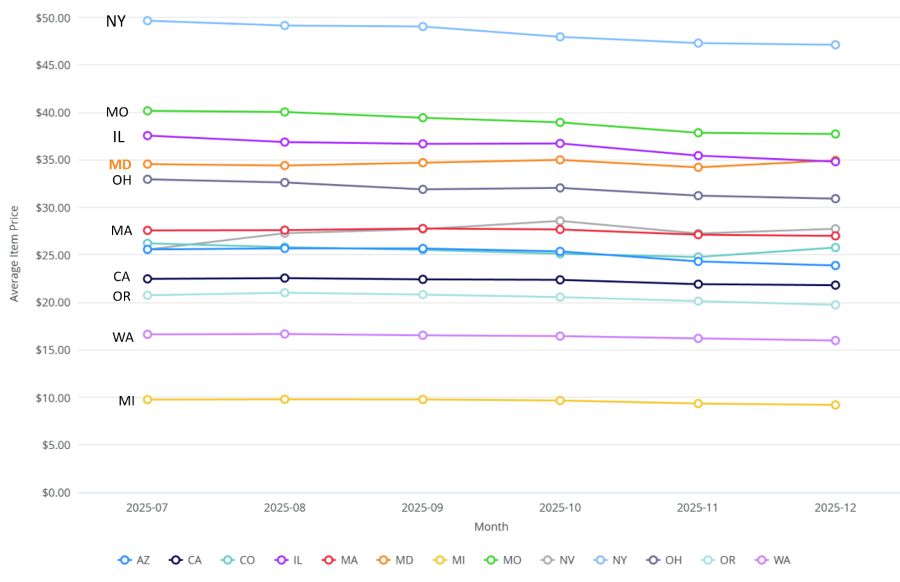
I have worked with brands that underestimated pricing dynamics in new markets. They priced too low and left money on the table. They priced too high without matching perceived value and lost the shelf. Maryland's higher price environment means there is room for premium positioning, but it also means consumers are price-sensitive when comparing options.
How Does Maryland Compare to Other States on Vape Pricing?
| State | Recreational Start | Vape Price Level |
|---|---|---|
| Maryland | July 2023 | High |
| New York | March 2023 | High |
| Missouri | December 2022 | High |
| Colorado | January 2014 | Low-to-Mid |
| California | January 2018 | Mid |
The pattern is consistent. Newer states have higher prices. As more licensed retailers open and competition increases, prices come down. Maryland is still early in that curve. For hardware suppliers like us, this means our brand customers in Maryland can currently support higher retail price points. That gives them room to invest in product quality and differentiation, which is exactly where we focus.
What Is the Real Story Behind Maryland's Vape Prices?
The headline price number looks stable. But if you stop there, you are missing something important that changes the whole picture.
According to Headset data, Maryland's dominant vape price range shifted from no clear leader in early 2024 to a $25–$40 range by 2025. Unit prices have stayed flat. But the volume of oil inside each unit has nearly doubled.
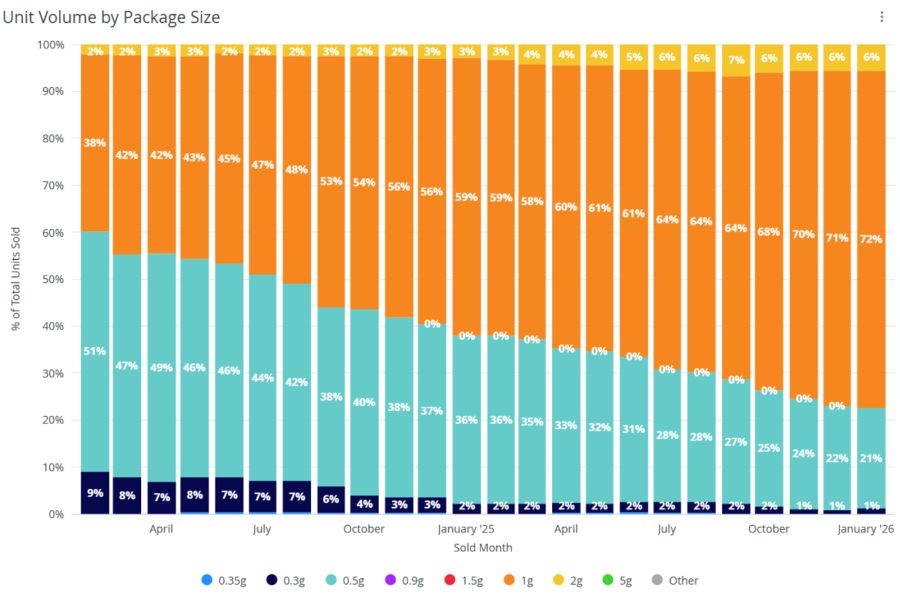
Here is what the data actually shows. The price per unit has not moved much. But the size of the unit has grown significantly. That means consumers are paying roughly the same price for twice the product. That is a real price decrease, even if it does not show up in the headline number.
How Has Vape Product Volume Changed in Maryland?
| Capacity | Early 2024 Share | Current Share | Change |
|---|---|---|---|
| 0.3g | 9% | 1% | -8% |
| 0.5g | 51% | 21% | -30% |
| 1g | 38% | 72% | +34% |
| 2g | 2% | 6% | +4% |
The shift is dramatic. The 0.5g product, which was the majority format just one year ago, has fallen to 21%. The 1g format is now the clear standard at 72%. The 0.3g format has nearly disappeared.
This tells me that Maryland's vape market is maturing faster than the overall market data suggests. Consumers are demanding more value per purchase. Brands are responding by moving to larger formats. And the effective price per gram of oil — what I call the equivalent price — has been falling steadily, even as the sticker price holds flat. For hardware manufacturers, this is a direct signal. The 1g cartridge and disposable format is now the default in Maryland. Brands that are still centering their lineup around 0.5g products are already behind.
What Oils Are Maryland Consumers Actually Buying?
Knowing the product format is only half the picture. The oil type inside the vape drives brand positioning, production complexity, and retail messaging.
Distillate leads Maryland's oil market at 69%. Live resin holds 16.5% and is growing. Diamonds, not live rosin-is the third-largest category in Maryland, which is unusual compared to most other states.
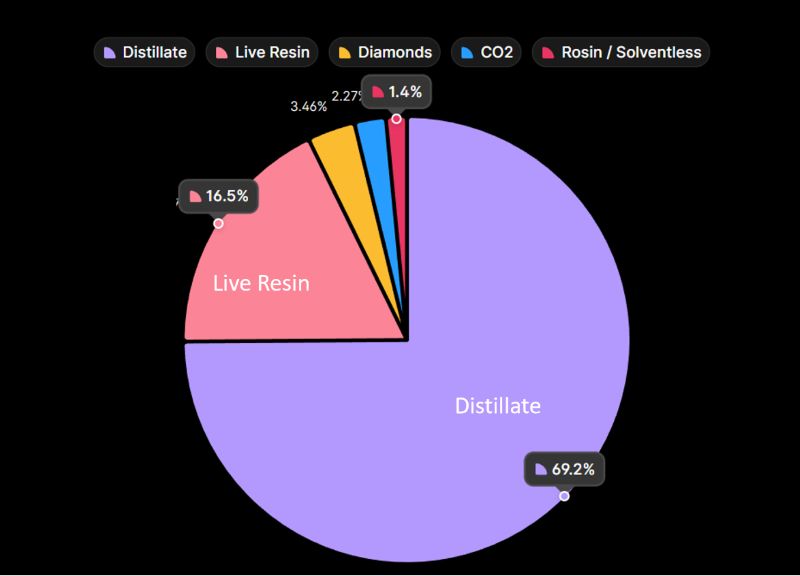
When I first saw that diamonds ranked third in Maryland, ahead of live rosin, I wanted to understand why. Most mature markets follow a different order. But Maryland's market is still young, and younger markets have their own logic.
Why Is Live Rosin So Low in Maryland?
| Oil Type | Maryland Market Share | Typical Mature Market Rank |
|---|---|---|
| Distillate | 69% | 1st |
| Live Resin | 16.5% | 2nd |
| Diamonds | ~8% | 4th–5th |
| Live Rosin | 1.4% | 3rd |
Live rosin is the most expensive oil type. It requires more complex extraction, cold-chain handling, and careful formulation. In a market where vape prices are already high and consumers are still getting used to legal cannabis, live rosin faces a double barrier. The price is hard to justify for a consumer who is still learning the difference between oil types. Diamonds offer something different — a high-THC, visually distinct product that feels premium but does not carry the same production cost as live rosin.
As Maryland's market matures and consumer education improves, I expect live rosin's share to grow. I have seen this in California and Colorado. But right now, distillate and live resin are the volume plays, and diamonds fill the premium tier. Brands entering Maryland should plan their oil strategy around this reality, not around what works in a mature market.
Conclusion
Maryland is a newer market with higher prices, a fast shift to 1g formats, distillate dominance, and real room for vape category growth as the market matures.